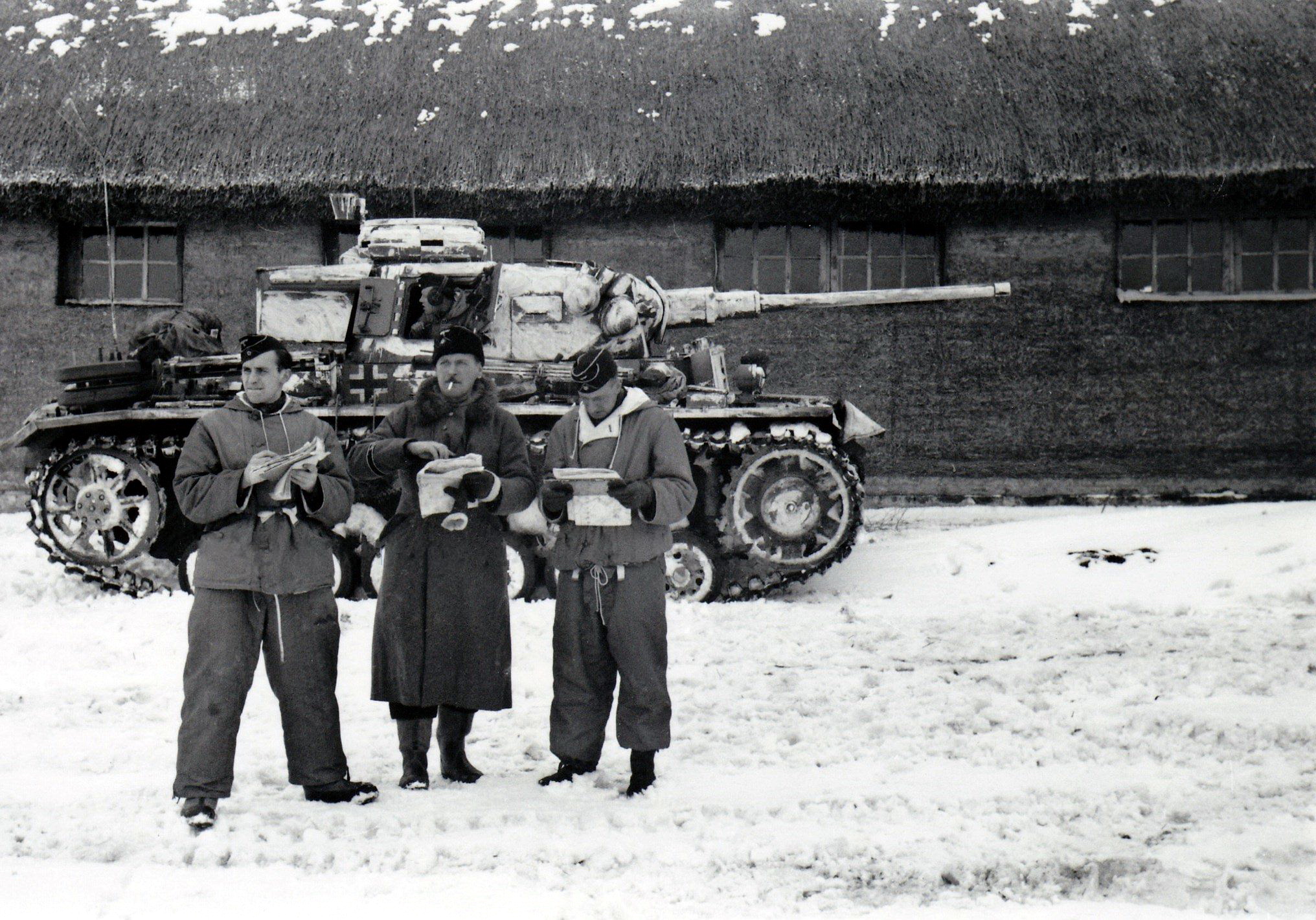
Rudolf
Sieckenius was born in Ludwigstal, Silesia, on May 16, 1896, the son of
Alexander Sieckenius, a successful businessman. Both men planned for
Rudolf to follow in his father’s footsteps. In school, he studied
accounting and industrial mathematics, as well as French, because the
family business required trips to the south of France and Lorraine.
The
outbreak of World War I in August 1914 totally disrupted the family’s
plans. Rudolf was no less affected by the patriotic fervor that swept
Germany than the typical 18 year old, and he joined the 5th Foot
Artillery Regiment of the Silesian 9th Infantry Division on the 22nd of
that month. He fought on the Western Front as part of the Crown Prince’s
5th Army, taking part in the invasion of Lorraine. In September, the
division (along with the 10th Infantry Division from Posen) established
itself in the Côtes de Meuse (the Calonne trench), where it remained for
two years. Sieckenius, meanwhile, transferred to the cavalry and
applied for officers’ training. More infantry officers were needed than
cavalry officers, however, so Sieckenius again changed branches. He
underwent a brief training course and, on December 27, 1916, graduated
as a ‘‘90-day wonder,’’ as the enlisted men somewhat derisively called
the new second lieutenants (but never to their faces). Commissioned in
the 154th Infantry Regiment (also of the 9th Infantry Division),
Sieckenius served as platoon leader in the trenches and became a
battalion adjutant in November 1917. He fought in the Côtes de Meuse
again (from February through the end of April 1917), in the California
Plateau sector (May to September 1917), and at Chemis des Dames
(September to December 1917). Sieckenius’s unit was pulled out of the
line at the end of 1917 and partially rebuilt. It did not return to
combat until March 1918, when it suffered heavy losses at the Battle of
Picardy. Withdrawn again, it fought in the Battle of Aisne, where it
lost another 3,000 men.
Sieckenius and his comrades fought in the
Second Battle of the Marne in the summer of 1918 and in the Champagne
district that fall. A first-class division from 1914 through 1917, its
performance deteriorated in 1918 and, on November 4 alone, 1,800 of its
men were captured. Rudolf Sieckenius was not among them, however; he was
still fighting at the end of the war. Following the collapse of the
Second Reich in November 1918, he was discharged from the army on
October 20, 1919.
When Sieckenius returned to Silesia in 1919,
the new Germany—which was called the Weimar Republic—was characterized
by civil unrest, rebellion, political confusion, occasional anarchy, and
economic turmoil. Like many former officers, Rudolf decided to join the
police. He applied for a post with the Silesian Landespolizie (State or
Provincial Police) and entered the service on April 29, 1920. Two
months later, he was a police lieutenant.
Rudolf Sieckenius did
well in the Weimar civil service. He became a qualified instructor in
calisthenics and physical fitness (and retained his thin waist
throughout his life), attended the excellent Equestrian Training School
at Bamberg, and was named commander of the elite Escort Company of the
Silesian Mounted Guards Police Battalion. He was promoted to first
lieutenant in 1923 and to captain of police in 1928.
Hitler came
to power in 1933 with the avowed intention of expanding the army, a
program he secretly began in 1934. When Sieckenius read a memorandum
from the Reich’s Defense Ministry soliciting former soldiers in the
civil police to resume their military careers, he jumped at the chance.
On May 27, 1934, he was gazetted Rittmeister (captain of cavalry) in the
I Squadron of the 11th Cavalry Regiment, which was based in Breslau.
Initially, he was OIC (officer-in-charge) of the regimental stables. On
April 1, 1935, however, he was transferred to Stuttgart as chief staff
officer of the 7th Heavy Cavalry Regiment. Shortly thereafter, he was
placed in charge of the motorized elements of the regiment—the 1st, 2nd,
and 3rd Motor (Truck) Detachments. He was thus in a position to become
familiar with motorized warfare.
In October 1935, General of
Mobile Troops Oswald Lutz and Colonel Heinz Guderian created the first
three panzer divisions. Sieckenius quickly transferred to the new panzer
branch and was named commander of the 6th Panzer Company, 2nd Panzer
Regiment, which was part of the 1st Panzer Division at Weimar. He was
promoted to major on March 1, 1936.
Despite his rank, Sieckenius
continued to command his company until October 6, 1936, when he was
appointed Ordnance (Orderly) Officer to Lieutenant General Baron
Maximilian von Weichs, the divisional commander. In October of the
following year, Weichs was promoted to the command of Wehrkreis XIII at
Nuremberg, and Sieckenius was transferred to the command of the I
Battalion of the newly formed 15th Panzer Regiment at Oppeln. Here he
found that he could not get along with Lieutenant Colonel Johannes
Streich, the mediocre commander of the 15th Regiment, who was a
difficult superior. Their relationship deteriorated to the point that,
in January 1939, Striech shouted at both of his battalion commanders
(Sieckenius and Paul Goerbig) in public—and they shouted back! The
division commander remedied this impossible situation by arranging for
both Sieckenius and Goerbig to receive lateral transfers. Goerbig was
given command of the 67th Panzer Battalion of the 3rd Light Division,
while Sieckenius received command of the 66th Panzer Battalion of the
2nd Light.
Sieckenius’s new division was commanded by Georg
Stumme, a competent but pleasure-loving general. The atmosphere,
Friedrich von Stauffenberg wrote later, was ‘‘very congenial’’ and the
2nd was ‘‘a crack, well-officered division.’’ Sieckenius soon developed a
close personal friendship with Major Walter von Neumann-Silkow, the
commander of the 37th Reconnaissance Battalion.
The 2nd Light
went into battle in southern Poland in September 1939 and acquitted
itself well. Every officer in a position to know, however, recognized
that the light divisions had proved to be unbalanced and difficult to
command in Poland. No one was sorry when OKH announced in mid-October
that they were to be converted into panzer divisions. The 2nd Light
became the 7th Panzer, and Sieckenius’s battalion became the III
Battalion of Rothenburg’s 25th Panzer Regiment. Sieckenius, meanwhile,
was promoted to lieutenant colonel on October 1, 1939.
Sieckenius
did well in France and, at one point in the pursuit, his battalion was
the only one that could keep up with the hard-charging Rommel. The III
remained in the Bordeaux region of France until February 1941, when
Rommel was transferred to North Africa and was replaced by the more
congenial Major General Baron Hans von Funck, who would command the 7th
Panzer Division for the next three years.
Funck’s first task was
to move his division back to its home base of Gera in Germany. The 25th
Panzer Regiment was then supplied with a shipment of new tanks.
Sieckenius and his men were busy running them in; meanwhile, Hitler
decided to double the number of his panzer divisions by cutting the tank
strength of each in half. Experienced panzer officers were in great
demand and, on April 30, Rudolf Sieckenius said farewell to his
officers, men, and friends, and traveled to Bucharest.
There, he
joined the newly formed 16th Panzer Division, which was in the process
of loading aboard trains for a move back to Niesse, Silesia.
When
he arrived in Bucharest, Sieckenius found that he was there to replace
Colonel Hero Breusing, the commander of his own old regiment, the 2nd
Panzer. The circumstances were not the best. Although every major panzer
leader except Walter Nehring thought Hitler’s plans to create 20 panzer
divisions from the original 10 was a bad idea, only Hero Breusing said
so publicly. A highly respected expert in mobile warfare, Breusing had
served in the Motor Transport Branch under both Lutz and Guderian since
as early as 1930. He taught armored tactics to the General Staff
aspirants at the War Academy, and he contributed numerous articles on
that subject to various military journals. He had led the 2nd Panzer
Regiment with considerable distinction in Poland and France. When Hitler
cut the strength of the tank divisions in half, Breusing wrote a number
of critical articles on the subject. They were published without
comment in several military journals, where they attracted the attention
of the High Command of the Armed Forces (OKW) staff. Someone took one
or more of the articles to Hitler, who had Breusing summarily relieved
of his command. Rudolf Sieckenius therefore inherited a very unhappy
regiment, and his officers greeted him with guarded hostility and
suspicion.
Fortunately for the uncomfortable Sieckenius, his new
division commander was the very experienced and competent Hans Valentin
Hube. This major general had lost an arm at Verdun in 1916 and, as far
as I am able to determine, was the only handicapped officer selected for
the Reichsheer. Hube understood the situation and let it be known that
he expected his officers to give the new regimental commander their full
support and cooperation, and to try to make him feel at home.
Sieckenius’s transition was further aided by the rush of events. The
division almost immediately moved to its jump-off positions on the west
bank of the Bug River. On June 22, 1941, Operation Barbarossa, the
German invasion of the Soviet Union, began. The 16th Panzer followed the
11th Panzer Division across the river at Sokol-Krystinopol and was
immediately involved in the fierce frontier fighting.
The Russian
border area was fortified and strongly defended, but the division
fought its way through in a matter of days. Then, from June 27 to July
1, the Red Army counterattacked in almost overwhelming strength, using
hundreds of tanks that were mostly superior to the German panzers. The
division, however, held its positions and beat back every attack. When
the Soviets finally retreated, they left 243 burned-out tanks on the
battlefield. Most of them had been destroyed by the 2nd Panzer Regiment.
For his part in the victory, Hube personally presented Sieckenius with
the coveted Knight’s Cross on July 15.
Sieckenius continued to
lead the 2nd Panzer Regiment in the huge battle of encirclement at Uman
and the subsequent Russian breakout attempts in and around
Monasterischtse and in the dense Oratov Forest (July 25 to August 2).
There was no time for rest, however. Sieckenius set off immediately down
the meandering Bug and his I Battalion (under Reserve Major Count
Hyazinth Strachwitz) seized Pervomaisk by coup de main. The next day,
Sieckenius personally led a surprise attack and captured the bridge at
Vosnesenk.
The furious pursuit continued until August 6, when the
division was checked outside the Black Sea naval base of Nikolaev. The
base was screened and the battle turned over to the infantry, which
captured it on August 20, while Hube’s division moved north to
Kirovograd. Meanwhile, near Novo-Danzig, Soviet forces surprised and
captured the 6th Company of the 79th Rifle Regiment. After it
surrendered, every man was mercilessly massacred.
News of this
atrocity was received with shock and rage by the men of the 16th Panzer
Division. Sieckenius and his men had been aware of Hitler’s ‘‘Commissar
Order,’’ which had been issued before the invasion began, under which
captured Soviet political officers were to be summarily executed as war
criminals. Field Marshal Gerd von Rundstedt, the commander of Army Group
South, had not made much of an effort to disseminate the order and
Colonel General Ewald von Kleist, the commander of the 1st Panzer Group,
had ignored it altogether.
His units, including the 16th Panzer
Division, had behaved remarkably well—until now. After Novo-Danzig,
however, everything was different, and the war became increasingly
brutal.
Meanwhile, the recon battalion of the 16th Panzer (Major
von Witzleben) seized a bridgehead over the wide Dnieper River near
Kremenchug on September 11. The next day, the entire division was across
the river and barreling through the rear areas of the Soviet armies
defending Kiev and the Ukraine. On September 16, near Lubny on the Sula
River, the 16th Panzer Engineer Battalion linked up with Walter Model’s
3rd Panzer Division of Guderian’s 2nd Panzer Group, surrounding more
than 700,000 Soviet soldiers. By the time the battle ended on September
26, five Red armies had been destroyed and 667,000 men surrendered,
along with 3,718 guns and 584 armored vehicles. Hube’s division was not
there for the finish, however. Led by von Witzleben, Strachwitz, and
Sieckenius, it was off and running to the southeast, where it played the
major role in smashing the Soviet 18th Army around Melitopol. The
division found the body of the Russian army commander, General Smirnoff,
on October 6. Hube ordered him buried with full military honors.
For his services to date, Rudolf Sieckenius was promoted to colonel on October 1, 1941, with seniority to date from February 1.
The
target for the next advance was Rostov, and it was harder. It began on
October 12, and was hampered by supply problems and maintenance
difficulties. The rainy season set in on October 27 and the division,
which had clearly outrun its supply lines, halted. The offensive was not
resumed until November 17–18, when the first severe frost hardened the
soil. Rostov was captured by the III Panzer Corps on November 20, while
the 16th Panzer covered its northern flank.
Stalin’s winter
offensive on the southern sector began on November 22—earlier than
elsewhere. Hube’s division alone faced 10 Russian divisions. On November
28, in near blizzard conditions, the 1st Panzer Army finally retreated
and Rostov was abandoned. Sieckenius and his two battered battalions
fell back to the Mius, where the Reds were finally halted. While his
regiment huddled in their bunkers near the front, Sieckenius spent much
of his time that winter in Stalino, supervising the arrival of new tanks
and begging for more.
The summer campaign of 1942 began in June.
Hube moved up to the command of the XIV Panzer Corps in September, and
Lieutenant General Gunther Angern took over the division, which was then
on the Volga and fighting in the northern suburbs of Stalingrad. It was
committed to street fighting by the 6th Army commander, Colonel General
Friedrich Paulus, who did not seem to understand that armored divisions
should not be sent into combat in built-up areas. By mid-November, the
division had been reduced to a strength of 4,000 men—about one-quarter
of its strength in May 1941.
Finally, on November 20, the 94th
Infantry Division completed the relief of the 16th Panzer in the line at
Stalingrad, and the depleted division headed west for the Donetz, where
it was to undergo a complete refit. Angern instructed Sieckenius to
command the vanguard while he personally directed the rearguard. As fate
would have it, however, Stalin’s counteroffensive began on November 19.
The northern pincher overwhelmed the 3rd Rumanian Army in one day and
cut right across the line of march of the 16th Panzer Division on the
evening of November 20. The fighting was fierce, but Sieckenius was cut
off from the rest of the division on November 21. Sieckenius had the 2nd
Panzer Regiment, the I/64th Rifle Regiment, the 16th Panzer
Reconnaissance Battalion, most of the 16th Engineer Battalion, and the
16th Tank Destroyer Battalion, which was led by Major Curt von
Burgsdorff, a 56-year-old reservist who had volunteered for frontline
duty after his only son was killed near Moscow in early 1942. Angern was
left inside the pocket with the 79th Panzer Grenadier Regiment, most of
the 64th Panzer Grenadier (led by Lieutenant Colonel Dr. Woermann), and
the entire 16th Panzer Artillery Regiment (led by Colonel Ernst
Strehlke), as well as assorted divisional troops and the staff of the
16th Panzer Brigade under Major General Hans Adolf von Arenstorff.
Sieckenius
divided his command into two (later three) combat groups and did
yeoman’s service, bolstering and often restoring the thin German line as
it was pushed westward, back across the frozen Donetz. Sieckenius was
severely wounded in mid-January 1943 and was shipped home to recover.
Strachwitz assumed command but was himself seriously wounded two days
later, so command devolved on Major Bernhard Sauvant, the former
commander of the II/2nd Panzer Regiment, who was the senior surviving
officer outside the pocket.
Soon Sauvant would be the senior
surviving officer of the division, period. In Stalingrad, the rest of
the 16th Panzer Division was crushed. Rather than surrender to the
Russians, General Angern committed suicide on February 2, and the
ranking surviving officer, Lieutenant Colonel Dr. Woermann, surrendered
the remnants of the division that same day.
The forces still with
Sauvant were sent back to Stalino and put on trains for France, where
the division was to rebuild. Meanwhile, on February 5, 1943, Colonel
Sieckenius visited the commander of Wehrkreis II in Stettin and reported
for duty. He now wore the Wounded Badge in Silver, which was awarded
only after a soldier received his third wound. He was allowed to recover
for 10 more days and was then ordered to report to Panzer Troop Command
VI Headquarters at Warendorf for reassignment.
After two weeks
of light duty, he flew to Mayenne, France, where he replaced Colonel
Burkhart Mueller-Hildebrand as commander of the reception staff of the
rebuilding 16th Panzer Division. He assumed formal command of the
division near Laval on March 5. It initially consisted of 3,400 men who
returned from service in Russia and 600 Russian volunteers, who were
called ‘‘Hiwis.’’ These were soon joined by thousands of new inductees,
and dozens of new tanks, self-propelled guns, artillery, and new
Mercedes half-tracks, which were called ‘‘bucket cars.’’
On May
23, General of Panzer Troops Hans Hube—en route to Italy as the
commander of the rebuilt XIV Panzer Corps—visited the division to take
its salute on the anniversary of the Battle of Mont Morion, which the
original 16th Panzer had won in 1940. That evening, Sieckenius and his
officers entertained their former commander at dinner at Mayenne, and,
as a body, entreated Hube to request their unit be assigned to his
corps. It did not take too much pleading.
Hube was one of the
very few army generals Hitler respected and trusted throughout the war,
so he readily agreed to assign the new division to the XIV Panzer Corps.
On May 25, the 16th Panzer began its trip to northern Italy. The
infantry went by way of Munich and the Brenner Pass; the heavy equipment
traveled via Avignon and Nice. They rendezvoused near Siena in Tuscany
in early June. Meanwhile, Rudolf Sieckenius was promoted to major
general, effective June 1, 1943.
Hube defended Sicily with the
15th and 29th Panzer Grenadier Divisions and the Luftwaffe’s Hermann
Goering Panzer and 1st Parachute Divisions. Meanwhile, on July 25, the
23-year reign of Benito Mussolini ended when he was deposed by the king
and was arrested as he left the palace. The new government under Field
Marshal Pietro Badoglio hotly proclaimed its loyalty to the Third Reich,
but Adolf Hitler knew the Italians were lying. They were just waiting
for the right moment to defect.
Sieckenius, meanwhile, moved his
division south and deployed every available unit along the Gulf of
Salerno, but positioned them about three miles from the beaches, in case
the Allies tried to land paratroopers in Hube’s rear. He also kept a
wary eye on his Italian counterparts, General Gonzaga’s 222nd Coastal
Defense Division. In the meantime, Hube successfully evacuated Sicily.
Montgomery’s 8th Army crossed the Straits of Messina on September 3 and
invaded the Reggio da Calabria, the toe of the Italian boot.
Hitler
was right about the Italians. They surreptitiously signed surrender
terms with the Allies at Cassibile, Sicily, but the news was not made
public until Wednesday, September 8, when General Mark Clark’s
Anglo-American invasion force, the U.S. 5th Army, was already on its way
to Italy.
As soon as he heard the news, Sieckenius dispatched
his intelligence officer, Major von Alvensleben (who spoke fluent
Italian), along with an armed motorized detachment, to General Gonzaga’s
headquarters to arrest and disarm the Italian coastal defense division.
On the way, Alvensleben found that half of Gonzaga’s men had abandoned
their posts and headed for home. Once at HQ, the remaining senior
officers surrendered immediately and made no trouble; Gonzaga, however,
refused to capitulate. One word led to another, and Alvensleben slapped
his holstered Luger as a threatening gesture. Gonzaga at once pulled his
service revolver, waved it at the major, and shouted for help, which
was not forthcoming. One of Alvensleben’s soldiers, believing that the
major’s life was in danger, opened up with his Schmiesser automatic.
Gonzaga was killed instantly. Sieckenius saw to it that his body was
sent home with appropriate honors.
The 222nd Coastal Defense
Division ceased to exist on September 8, and it was not too soon. On
September 9, the Anglo-American invasion force landed at Salerno and on
its neighboring beaches. Sieckenius pounded the sector with artillery
and multiple rocket launchers, while his own units were blasted by the
big guns of the Royal Navy and later the U.S. Navy. The 16th Panzer
Division began launching counterattacks on September 10.
The
Battle of Salerno was hard fought on both sides, and the 16th Panzer
gave the Americans some very bad moments. At one point, Sieckenius
penetrated almost to the invasion beaches, and Lieutenant General Mark
Clark, the commander of the U.S. 5th Army, was contemplating a retreat
to his ships. The 16th Panzer was halted in front of the last American
defensive line.
Reinforced by battle groups from three other
divisions, Sieckenius attempted to launch a massive tank attack on
September 16 and 17, but both efforts were aborted when Allied naval
guns and airplanes blasted the units in their assembly areas. The
Germans began to retreat on September 18. OKW considered that, at the
very least, they had won a major prestige victory. Casualties had been
very high: almost 7,000 Allies were killed, wounded, or missing. The
Germans lost 840 killed, 2,002 wounded, and 630 missing. At least 90
percent of these were from Sieckenius’s division.
Meanwhile,
Sieckenius conducted a perfectly orchestrated withdrawal to the
Avellino-Olfante line. He personally commanded the rearguard and
inflicted heavy damage on the U.S. VI Corps around Teora on September
24–25.
With the German right flank secured, Sieckenius was
called to stabilize the left, where Montgomery’s British 8th Army had
secured a bridgehead over the Biferno River at Termolin, near the
Adriatic coast. The division made a long 95-mile road march along the
difficult mountain roads of the Apennines during the night of October
4–5. As a result, it was badly strung out and went into battle against
the British piecemeal. In a tough battle against two British armored
brigades, Sieckenius lost most of his remaining armor, mainly to British
air strikes. Now a burned out unit at kampfgruppe (regimental)
strength, the 16th Panzer covered the retreat of the LXXVI Panzer Corps
to the north. It was, however, unable to prevent Montgomery’s commandos
from seizing a small bridgehead across the Trigno, south of the town of
Vesta. The bridgehead was quickly sealed off by the 16th Panzer, and the
entire Allied advance was halted by the onset of the rainy season,
which turned the entire country into mud.
Meanwhile, Field
Marshal Albert Kesselring, the OB South and commander-in-chief of Army
Group C, had promised Hitler he would hold the Volturno-Biferno line
until at least October 16. He had failed, and now Berlin was demanding
scapegoats. For no good reason, Rudolf Sieckenius and the 16th Panzer
Division were selected. Sieckenius was relieved of his command on
October 31, 1943, and his career was ruined.
How Hitler, OKW, and
OKH could have found any legitimate cause for dissatisfaction with the
performance of the 16th Panzer is impossible to understand. It fought
the Battle of Salerno almost singlehandedly and, despite the tremendous
odds against it, narrowly failed to throw the Americans back into the
sea. It then checked the U.S. VI Corps at Teora and, after a difficult
forced march, stabilized the German left flank against greatly superior
British forces. In the process, it lost more than half of its men and
most of its tanks and artillery.
Despite its truly heroic
efforts, however, the divisional history records that not one member of
the 16th Panzer Division was awarded the Knight’s Cross or the German
Cross in Gold in September or October
1943!
General Sieckenius
was placed in Fuehrer Reserve in Kassel, Wehrkreis IX, and his rank was
permanently frozen. He was forced to take a course in National
Socialist Leadership Procedure, as well as the short Division
Commanders’ Course, which was given only to officers who had been
earmarked to command a division but had not yet done so (unless it was
briefly and on a temporary basis only). This was an insult, because he
had already commanded a division in combat and had done so with
considerable skill. Thoroughly bewildered and frustrated, he was
unemployed until February 21, 1944, when he was ordered to report to the
Army Personnel Office in Berlin. He was attached to the 1st Bureau as a
reserve division commander. A month later, he was sent to Army Group
North in Russia for use as a backup division commander, to be used if a
regular divisional commander went on leave, was wounded, or was killed.
Sieckenius
hung around headquarters until May 2, when Lieutenant General Konrad
Heinrichs, the commander of the 290th Infantry Division, went back to
Germany on leave. Sieckenius defended a sector near Lake Ladoga until
May 23, when General Heinrichs returned. Meanwhile, on May 21,
Lieutenant General Werner Richter, the commander of the 263rd Infantry
Division, was mortally wounded while defending a sector on the Duna
River. Although unacquainted with static (completely unmotorized) units,
Sieckenius took command at once and directed the division in a skillful
retreat to the Dvina during the massive Soviet offensive of June–July
1944.
Sieckenius led the 263rd Infantry until August 14, when
Major General Adolf Hemmann arrived to replace him. Next, he was sent to
Breslau, to supervise the dissolution of the 221st Security Division,
which had been smashed by Stalin’s massive offensive of June–July 1944.
(The permanent commander, Major General Hubert Lendle, had committed the
sin of escaping death or capture, so he had been summarily dismissed.)
General Sieckenius completed this unpleasant task by August 31.
Meanwhile,
the 391st Field Training Division was reforming in Breslau as a
security division. It had been smashed in the Minsk-Bobruisk
encirclements, and its previous commander, Lieutenant General Baron
Albert Digeon von Monteton, had been transferred to Army Group North as
the commandant of Lerpaja (Libau), and Rudolf Sieckenius was selected to
replace him.
Sieckenius’s new command included the 312th Field
Training and 566th Security Regiments. The men were mainly overage
volunteers or draftees, rear-area personnel (including bakers, typists,
clerks, postal people, maintenance personnel, and so on), and returning
wounded. The 312th consisted of rear-area veterans of the defunct 206th
Infantry Division, which had been destroyed at Bobruisk. Its commander
had a serious health problem and would have been sent home, except for
his determination to continue soldiering. The commander of the 566th was
a 62-year-old reserve officer who had commanded the supply depot at
Pinsk until it was captured by the Red Army. With one or two exceptions,
all of the officers were from the noncombatant branches. Sieckenius had
no artillery, no heavy weapons companies, and no signal, engineer, or
reconnaissance units. Worse yet, he did not have any horses to speak
of—much less motorized vehicles!
Sieckenius made the best of a
bad situation and instituted a rigorous training regimen, including a
physical fitness program. Unlike the typical security or field training
division in 1944–45, the 391st was not raided for trained men and
replacements for regular combat units because of the need for a
permanent defensive force at Breslau and on the southern reaches of the
Oder River.
Meanwhile, in December 1944, Sieckenius was eligible for promotion to lieutenant general. He was summarily passed over.
In
late January 1945, the Soviets launched another massive offensive.
Sieckenius had done such a marvelous job that the 391st Security
Division was now actually considered a potentially battle-worthy unit.
The 9th Army, which was responsible for defending the lower Oder,
allocated Sieckenius a fleet of ancient trucks, as well as replacement
and training companies of signal troops and engineers, heavy machine
guns, and two batteries of self-propelled artillery. With these
reinforcements he hurried to the Oder, where he joined the V SS Panzer
Corps, which was holding the river from Guben to Eberswalde, on the
right flank of the 9th Army.
The V SS Panzer Corps was not a
panzer corps and did not have a single tank unit! It was commanded by SS
Lieutenant General Friedrich-Wilhelm Krueger, who was soon replaced by
SS Lieutenant General Friedrich Jeckeln, a mass murderer who had
commanded an Einsatzgruppen (an SS murder unit) in 1941.
The last
Soviet offensive began on April 16. Its objective was Berlin. Despite
overwhelming odds, the German line held until April 19; then it broke,
and the 9th Army was cut in two. The LVI Panzer and the two security
divisions of the V SS Corps were pushed back to the north, on Zepernick
and Ladeburg, while the rest of the army was in danger of being
encircled behind the Spree River, between Erkner and Zossen. Sieckenius
and Major General Emmo von Roden, the commander of the 286th Security
Division, lost contact with the Headquarters, V SS Corps, and more or
less by default placed themselves under the command of General of
Artillery Helmuth Weidling, the commander of the LVI Panzer Corps.
Weidling found himself named Battle Commandant of Berlin on April 25,
the day the city was surrounded.
The remnants of the 391st
Security Division were incorporated into the defensive perimeter of the
capital. Initially, Sieckenius’s forces held positions along the
Landwehr Canal, supporting SS Major General Joachim Ziegler’s SS
Nordland Division. Weidling, however, considered Ziegler a worn-out
force, so he replaced him with SS Major General Gustav Krukenberg, whose
33rd SS Grenadier Division ‘‘Charlemagne’’ had virtually ceased to
exist. He placed Sieckenius in charge of the entire sector.
During
the next three days, Sieckenius tried to hold his positions while the
German defensive lines were pressed ever backward, toward the center of
the city. Tempelhof airport was overrun on April 27 and, on the morning
of April 28, 1945, Sieckenius found himself surrounded in Goerlitzer
Station. His main forces had already been destroyed and the Russians had
pushed beyond him, toward the Fuehrer Bunker.
With their
ammunition almost gone, Sieckenius and a handful of survivors held out
until late afternoon, although they knew that their position was doomed.
General Sieckenius then ordered the survivors to save themselves, if
they could; meanwhile, he and a handful of stalwart volunteers would
launch a final suicide attack against the enemy to provide cover for
their escaping comrades. The general himself charged forward firing a
Schmieser machine pistol. A few moments later, Rudolf Sieckenius and his
entire band were cut down by Soviet machine guns...
Source :
"Rommel's Lieutenants: The Men Who Served the Desert Fox" by Samuel W. Mitcham
https://en.wikipedia.org/wiki/Rudolf_Sieckenius